World War II
The Shadow of the WindWorld War II is both a historical horizon and a pressure on private memory in the novel: its arrival redirects public attention from Barcelona’s recent Civil War, while its aftermath intensifies the poverty, secrecy, and unresolved trauma already surrounding the characters. The war’s decisive significance lies not only in what happens during it, but in the silence it leaves behind and the belated acts of testimony through which that silence is challenged.
Historical Setting
In 1945, six years after the end of the Civil War, Barcelona is still marked by its consequences, although people seldom speak openly about them. Public conversation has turned toward the world war, whose reach and death toll seem to overwhelm the still-recent local conflict. The shift does not mean that the earlier violence has passed: the city’s bruises remain, and everyday life is shaped by want and misery.
The novel sets the two wars beside one another without treating them as interchangeable. The worldwide conflict occupies public attention, while the Civil War’s aftermath remains embedded in local experience, hidden behind reticence and fear. This contrast makes historical memory uneven: one war becomes the subject people discuss, even as another remains difficult to name.
War, Silence, and Memory
The novel presents war as a force that feeds collective forgetting. Survivors are pressured to treat what they witnessed and did as though it were an illusion or a nightmare, while the voices capable of giving an account gradually disappear. In this account, silence is not simply the absence of speech; it helps conceal violence and leaves later generations with an incomplete history.
That public silence has a family counterpart. Before her death, Daniel’s mother made his father promise not to speak to him about the war or allow him to remember what had happened. His father later tells Daniel of that promise and admits uncertainty about whether he was right to keep it. The exchange reveals how historical trauma passes between generations not only through stories, but also through deliberate withholding—and how disclosure can arrive only after the person who imposed the silence is gone.
Violence and Its Afterlife
Fermín’s experience makes the persistence of wartime violence concrete. He recounts being arrested at the port while trying to obtain passage to France for his superiors. He was taken to Montjuic, detained, and tortured by Javier Fumero and a German-speaking accomplice in an attempt to force him to reveal where those superiors were hiding. Later, Dr Baró identifies Fermín’s scars as evidence of torture. The account connects an individual’s lasting injuries to a broader atmosphere of political persecution, while showing how his past becomes legible to Daniel only through later conversation and physical evidence.
Violence also continues in the changing political order that follows the fighting. In a retrospective account, Nuria describes Fumero’s role in the postwar purge and says that he later turned against former allies. The novel thus links wartime coercion to the next period of repression rather than presenting peace as a clean break. Its aftermath is marked by fear, secrecy, and danger that outlast the formal end of combat.
Testimony and Inheritance
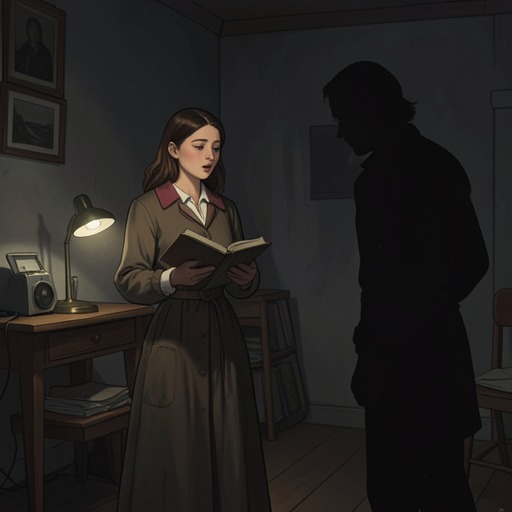
The novel’s account of war is assembled through delayed, partial acts of telling. Daniel’s father discloses the promise made to his mother; Fermín narrates the history behind his scars; and Nuria entrusts Daniel with a manuscript that asks him to remember her and Julian. Each testimony crosses a boundary that had kept the past contained, but none restores the dead or makes the losses reversible.
Nuria’s appeal to Daniel gives remembrance a personal as well as historical meaning. Her manuscript casts the young man as someone who may receive and carry forward what those who lived through the events could not safely say. Against the war’s power to erase witnesses, the novel places the fragile survival of their accounts: memory cannot undo violence, but telling can prevent the people it silenced from disappearing entirely.